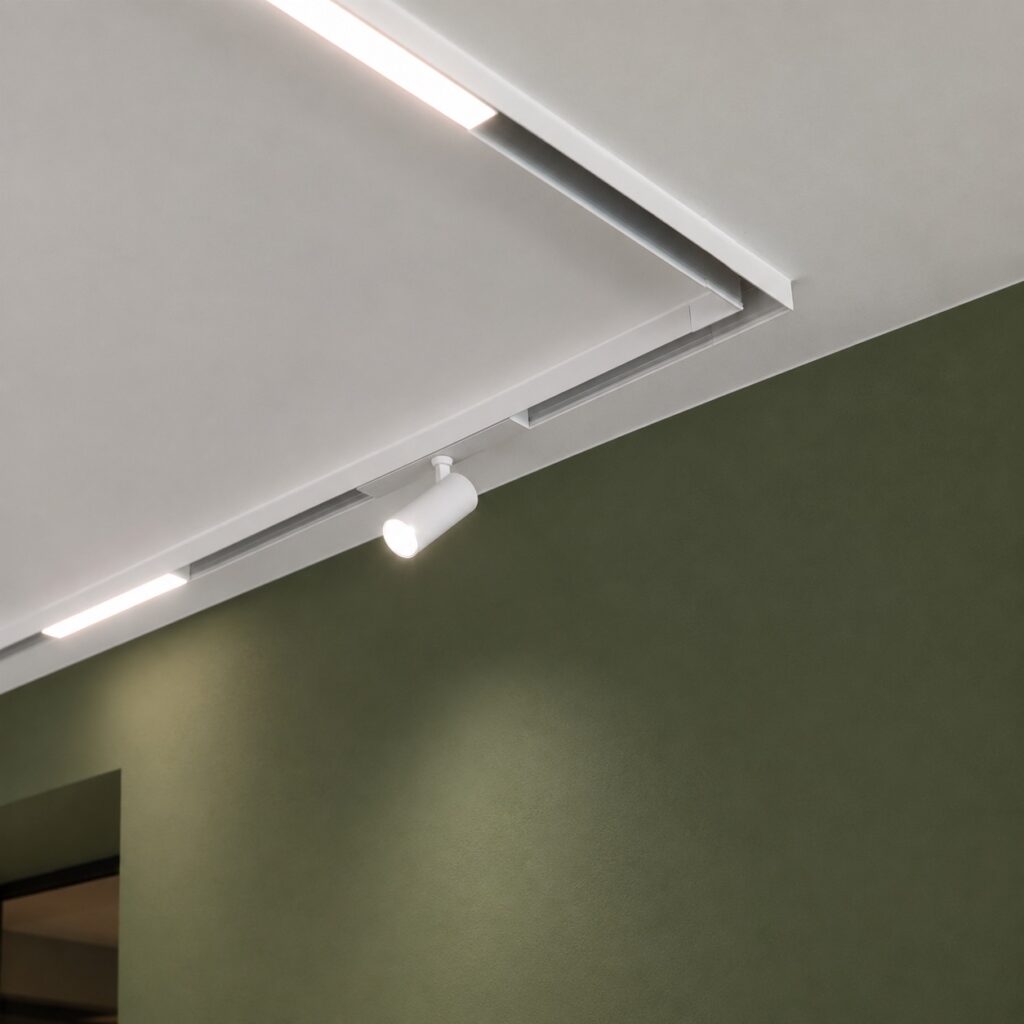

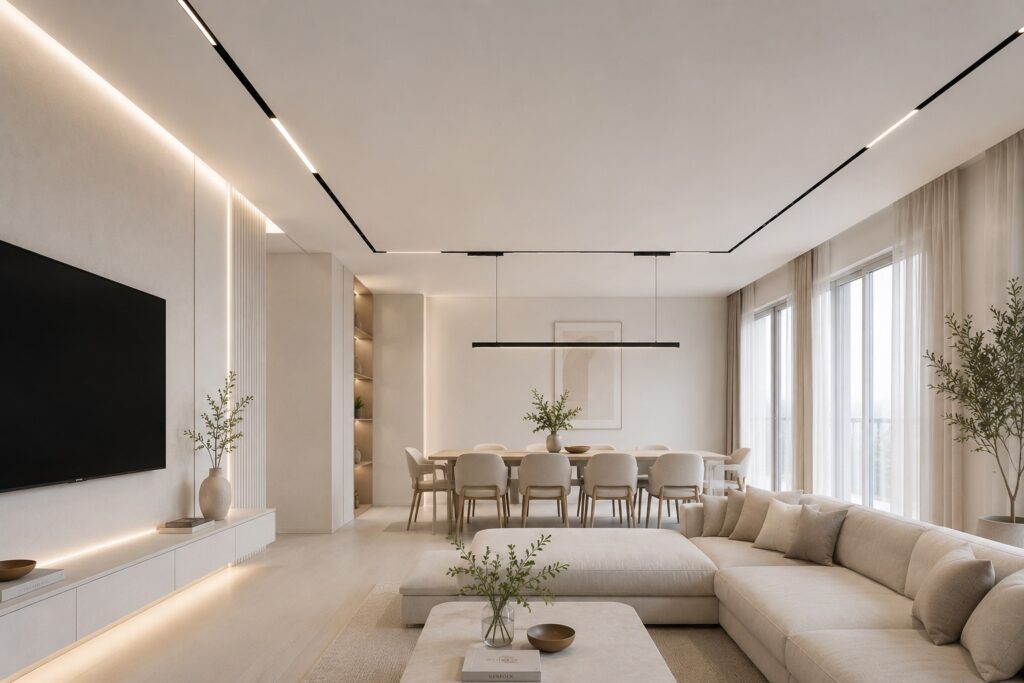
A magnetic track lighting system is a modular system that typically runs on 48V low voltage and allows different lighting modules to be attached magnetically to the track.
Unlike conventional track systems, luminaires can be repositioned easily, new modules can be added, and the lighting layout can be reconfigured to suit how the space is used.
A magnetic track system basically consists of the following:
- Magnetic track profile
- Power supply / LED driver
- Magnetic spotlights
- Linear light modules
- Pendant modules
- Wall washer luminaires
- Corner and connector elements
- Control and dimming equipment
- These components form the basis of the system.
- Thanks to this modular structure, the lighting system can be reconfigured whenever the architecture or use of the space changes.
Why Magnetic Track Lighting?
- Minimal, Architectural Look
Slim track profiles and compact luminaires blend with the architecture for a clean, modern look. Especially in recessed and trimless installations, the track becomes a natural part of the ceiling surface. - Flexible Lighting Design
Different light modules such as spots, linear, pendant and wall washer units can be used within the same system. This allows general, accent and decorative lighting to be delivered together from a single track. - Easy Reconfiguration
When the layout or purpose of a space changes, luminaires can be repositioned. This is a major advantage in retail stores, galleries, showrooms and other commercial spaces that change frequently. - Energy Efficiency
High-efficiency LED technology delivers effective lighting performance with low energy consumption. - Smart Control Options
Depending on the project, dimming and automation systems can be used to create different lighting scenes.
1. Start by Defining the Purpose of the Lighting
The first question when choosing the right magnetic track system is:
What should the light do in this space?
General Lighting
To create the basic light level of the space, linear modules with uniform light distribution and wide-beam luminaires are a good choice.
Accent Lighting
Adjustable spotlights and wall washers can be used to highlight products, objects, artworks, furniture or architectural details.
Task Lighting
Specific work surfaces such as kitchen islands, desks, meeting tables or reception counters need controlled and sufficient light.
Decorative Lighting
Pendant luminaires integrated into the magnetic system can add visual character to the space alongside functional light.
The best results usually come from combining different layers of light rather than relying on a single type.
2. Choose the Right Mounting Type
In magnetic track systems, the mounting type directly affects both the architectural look and the installation details.
Surface-Mounted Magnetic Track
A practical solution where work inside the ceiling is limited.
It is particularly suitable for:
- Concrete ceilings
- Renovation projects
- Existing buildings
and similar applications.
Recessed Magnetic Track
Setting the track profile into the ceiling creates a more integrated look.
It delivers a modern, clean result in residential, hotel, retail and office projects.
Trimless Magnetic Track
Its frameless design leaves no visible edge between the track and the ceiling.
It is one of the preferred solutions for minimal and high-end architectural projects.
Suspended Magnetic Track
In spaces with high ceilings, the track system is suspended from the ceiling.
It offers both a functional and an architectural solution for restaurants, offices, showrooms, meeting areas and high-ceilinged commercial spaces.
3. Take the Ceiling Structure into Account
The existing ceiling system must be examined before choosing the track type.
Mounting details differ for concrete, plasterboard, suspended, timber and exposed ceilings.
In new projects in particular, planning the magnetic track system early, together with the electrical and ceiling designs, significantly reduces detailing problems and extra costs during installation.
4. Assess the Dimensions and Layout of the Space
A longer track or more luminaires does not always mean better lighting.
Consider the following aspects of the space:
- Ceiling height
- Floor area
- Furniture layout
- Intended use
- Surface colours
- Amount of daylight
These factors should be assessed together.
In large commercial spaces especially, lighting calculations and light distribution, not just the track layout, should be part of the design process.
The goal is to provide enough light without creating dark areas, while avoiding unnecessarily high illuminance levels.
5. Choose the Right Luminaire Modules
One of the greatest advantages of magnetic track systems is that different luminaires can be used within the same architectural system.
Magnetic Spotlight
Provides controlled, adjustable light.
It is especially effective for highlighting retail products, artworks, objects and architectural details.
Linear Module
Provides wider, more uniform light distribution and contributes to the general lighting of the space.
Pendant Module
Combines decorative and functional light over tables, counters, islands and seating areas.
Wall Washer
Used to light vertical surfaces more evenly. It is an effective way to bring out wall textures, product displays and architectural surfaces.
Combining spots, linear modules and wall washers creates different layers of light in the same space for more balanced, architectural lighting.
6. Choose the Right Colour Temperature
The colour temperature of light directly affects the atmosphere of a space.
2700K
Creates a warmer, more relaxing atmosphere. A good choice for residential, restaurant and hotel projects.
3000K
Offers a balance between warmth and visual clarity. Suitable for homes, retail stores, hotels and many architectural applications.
4000K
Has a more neutral, dynamic character. Often preferred in offices and some commercial spaces.
When choosing a colour temperature, consider not only the intended use but also the materials, colour palette and interior design concept.
7. Pay Attention to the CRI Value
CRI (Color Rendering Index) expresses how accurately a light source renders colours.
While CRI>80 may be sufficient for general applications, CRI>90 or higher should be preferred for retail, residential, hotel, museum, gallery and other projects that demand high visual quality.
High CRI is an important criterion wherever the true colours of products, textiles, furniture and architectural materials must be perceived accurately.
8. Choose the Right Beam Angle
The beam angle determines how light reaches a surface and how controlled the accent will be.
15°–24°
For narrow, strong accents.
24°–36°
For general accent lighting and many architectural applications.
36°–60°
For lighting wider surfaces and general areas.
Using different optics together rather than a single beam angle creates depth and visual hierarchy in the space.
9. Don’t Forget Visual Comfort
Good lighting is not just about producing enough light.
Luminaires placed in the wrong line of sight or causing high glare can make even a technically well-lit space uncomfortable.
That is why, when choosing a magnetic track system, you should also evaluate visual comfort criteria such as:
- Anti-glare design
- Optical control
- Luminaire placement
- Glare control
- UGR values
These criteria matter as much as the amount of light.
The right light is not only seen; it is felt as comfortable.
10. Plan Control and Automation Options
Depending on the project, magnetic track systems can be integrated with different control technologies.
With DALI, dimming systems, sensors and various smart control infrastructures, light levels can be adjusted to suit each usage scenario.
For example, the same space can have different lighting scenes for daytime, evening, presentations, work or decorative use.
If a control system will be used, deciding on it at the start of the project is important for selecting the right drivers and system components.
Common Mistakes When Choosing a Magnetic Track System
Focusing only on how the products look is not the right way to choose a magnetic track lighting system.
The most common mistakes are:
- Ignoring the dimensions of the space
- Using more luminaires than necessary
- Choosing the wrong colour temperature
- Overlooking the CRI value
- Combining incompatible system components
- Ignoring glare control
- Poor or incorrect track layout
- Overlooking driver quality
- Not planning for future changes
These are the mistakes we see most often.
A well-designed system should provide flexibility not only for today but also for the future use of the space.
Where Is Magnetic Track Lighting Used?
Magnetic track systems can be used in a wide range of architectural projects:
- Residential Living rooms, kitchens, dining areas, bedrooms, corridors and home offices.
- Shops & Retail Boutiques, showrooms, jewellery stores and product display areas.
- Office Workspaces, meeting rooms, executive offices and receptions.
- Hotel & Hospitality Lobbies, restaurants, lounges, guest rooms and common areas.
- Museum & Gallery Artworks, exhibition areas and changing display layouts.
- Architectural Projects Villas, residences and bespoke interior design projects.
Conclusion: The Right System, the Right Light
The success of a magnetic track lighting system is not just a matter of choosing the track or the luminaires.
Architecture, light distribution, optics, colour temperature, visual comfort and control must be considered together.
At Conflux Lighting, we evaluate our projects not only through product selection but through the architecture of the space, its intended use and the character of light it needs.
A well-planned magnetic track system provides the lighting needed today while offering a flexible, clean and long-lasting architectural solution that adapts to future usage scenarios.
Frequently Asked Questions
Can the luminaires on a magnetic track be repositioned?
Yes. Compatible magnetic modules can be repositioned on the track and replaced with different modules when needed.
Should I choose surface-mounted or recessed?
It depends on the ceiling structure and the architectural design. Surface-mounted systems are easier to install, especially in existing buildings, while recessed and trimless systems offer a more integrated architectural look.
Can different luminaire types be used on the same track?
Yes, as long as the system components are compatible. Different modules such as spots, linear units, wall washers and pendants can be used together within the same magnetic track system.
Is a professional lighting design needed for a magnetic track system?
It is recommended, especially for retail, office, hotel, villa and large-scale architectural projects. Calculating luminaire power, optics, quantity and layout improves both visual comfort and system efficiency.